First employment of TCN in Malta

Understanding the First Employment of Third-Country Nationals in Malta: Key Facts and Recent Developments
Over the past decade, Malta has become one of the most dynamic labor destinations in Europe for third-country nationals (TCNs). According to official figures, the country issued around 28,000 work permits in 2023, marking a record high and highlighting just how crucial foreign workers have become to Malta’s economy. This rapid increase has pushed the government to reform and modernize the entire migration-for-work system, especially for first-time TCN employees.
At the heart of Malta’s framework lies the Single Permit, a combined work-and-residence authorization required for most non-EU nationals. What makes this permit particularly unique is its specificity: it is always tied to a particular employer and job role. In other words, a TCN’s right to live and work in Malta depends on maintaining that specific employment. If employment ends, the clock immediately starts—TCNs now have up to 60 days to secure a new job and submit a new application under updated 2025 rules.
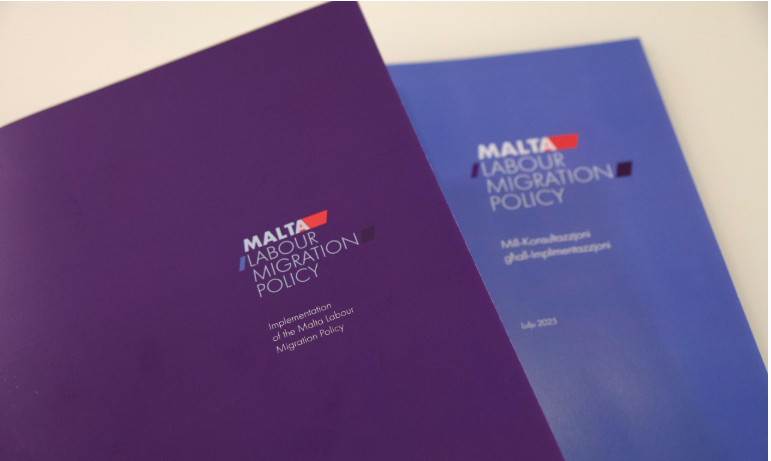
In parallel, Malta maintains a strict labor market test, ensuring that local and EU workers are prioritized. Employers must advertise any vacancy for at least three weeks before they can even consider hiring a third-country national. This step has become even more important under Malta’s latest labor migration policy, which introduced hiring benchmarks for companies based on size. For example, micro-enterprises are expected to employ a minimum number of Maltese/EU or long-term resident TCNs before applying to hire new TCN workers. This shift reflects Malta’s effort to balance labor demand with sustainable workforce integration.
Another significant aspect concerns employer accountability. With the 2025 reforms, companies with unusually high turnover of foreign workers may be restricted from rehiring for the same role for up to a year. The intention is clear: discourage abuse of the permit system and ensure that foreign employees are not treated as disposable labour.
The system also distinguishes between short-term employment and long-term employment. For work lasting under six months, TCNs follow a different process involving a Jobsplus license and a temporary residence authorization. Notably, these short-term permits cannot be renewed, meaning anyone wishing to continue working must transition to the Single Permit route.
For higher-tier roles, Malta offers fast-track pathways such as the Key Employee Initiative (KEI) and the Specialized Employee Initiative (SEI). These schemes cater to skilled professionals with specific salary thresholds – €45,000 and €30,000 respectively – and play an essential role in attracting specialist talent in areas such as tech, gaming, engineering, and finance.
Once employed, TCNs benefit from a principal Malta strongly upholds equal treatment. Legally, a third-country national must receive the same employment conditions as a Maltese or EU national doing the same job, ensuring protection in areas such as wages, working hours, and occupational safety.
Over the long term, Malta also offers stability. After five years of continuous legal residency, TCNs may apply for long-term resident status, granting more independence and mobility within the labor market.
Overall, Malta’s system for first-time TCN employment is a blend of opportunity and regulation. The island welcomes foreign talent, but it does so through a structured framework that balances economic needs, labor protection, and national policy objectives. With continuous reforms, especially in 2025, employers and prospective employees alike must remain aware of the evolving requirements – but for many, Malta continues to offer a compelling gateway to European employment and long-term settlement.
With further updates expected in the coming years, staying informed is essential for anyone planning to recruit or relocate to Malta. Visio Consultancy remains committed to guiding businesses and individuals through every step of the process, ensuring full compliance and smooth integration into Malta’s evolving labour landscape.